|
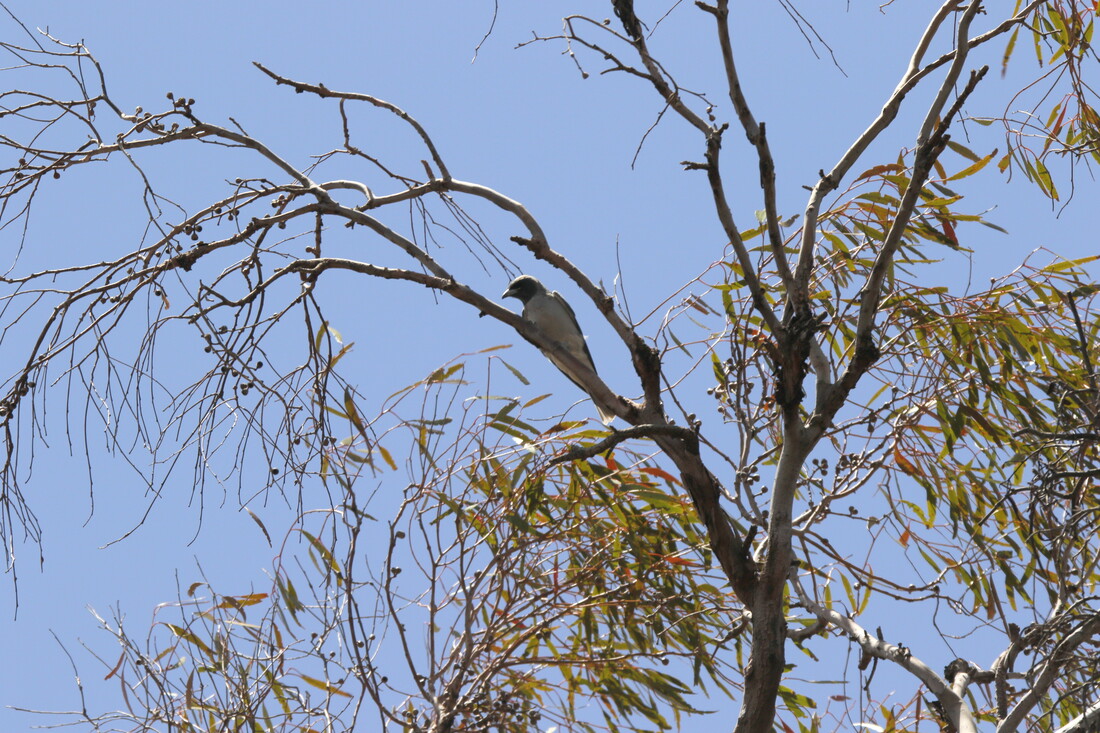
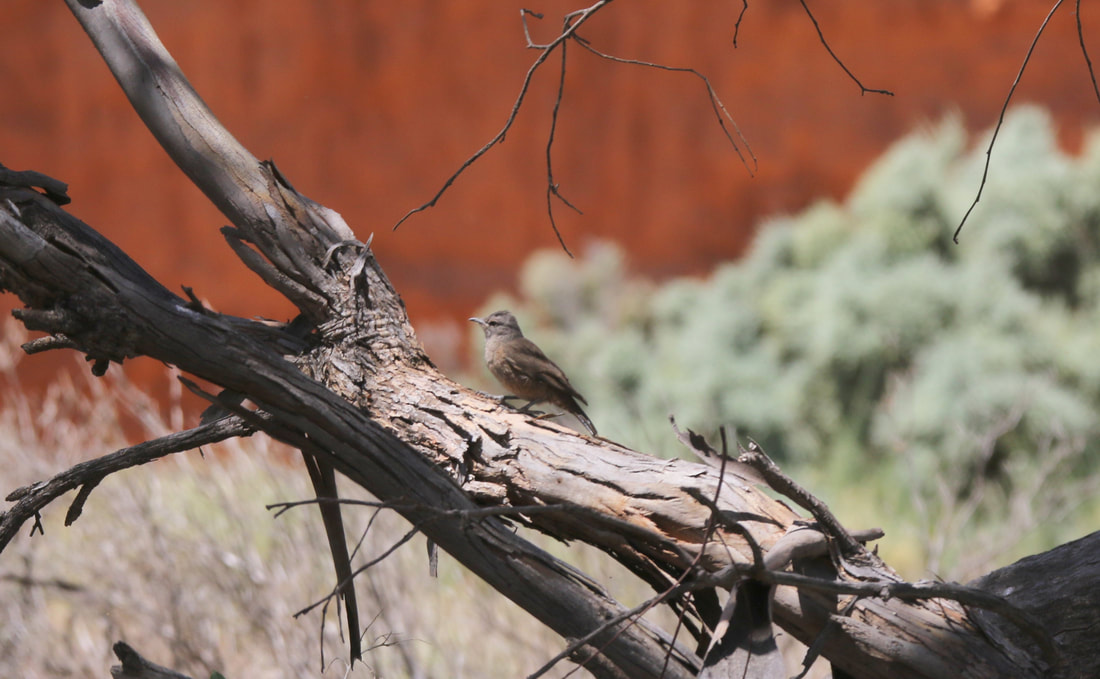
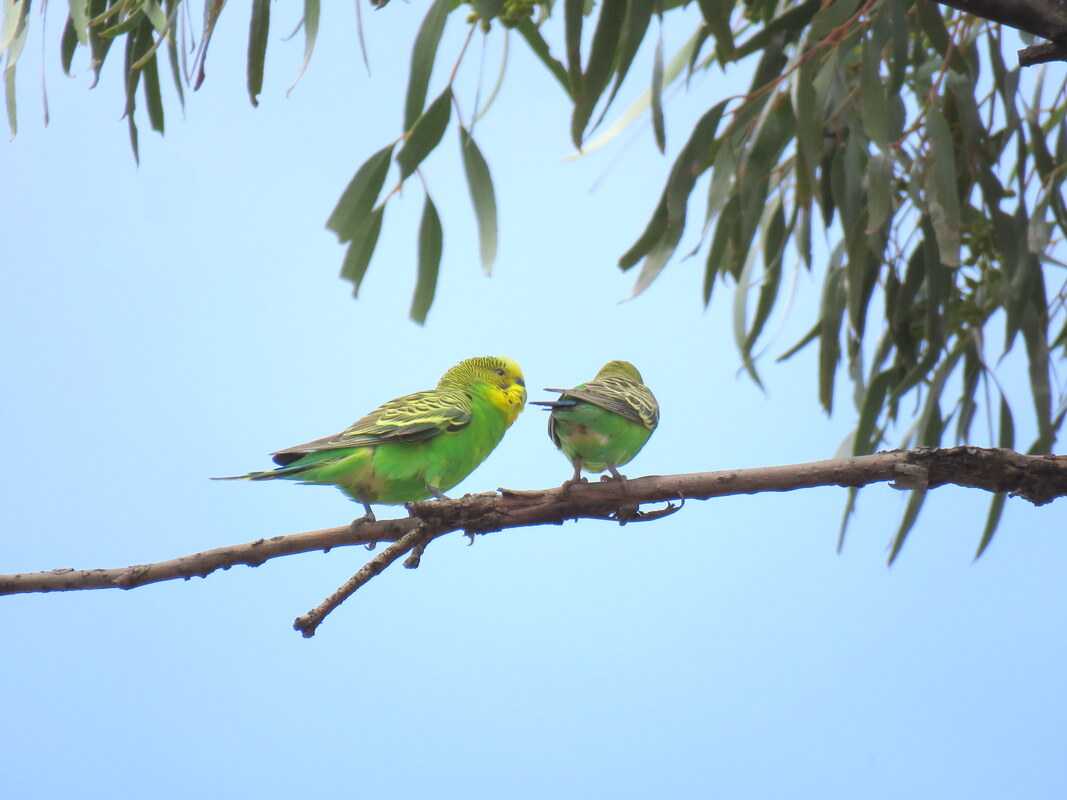
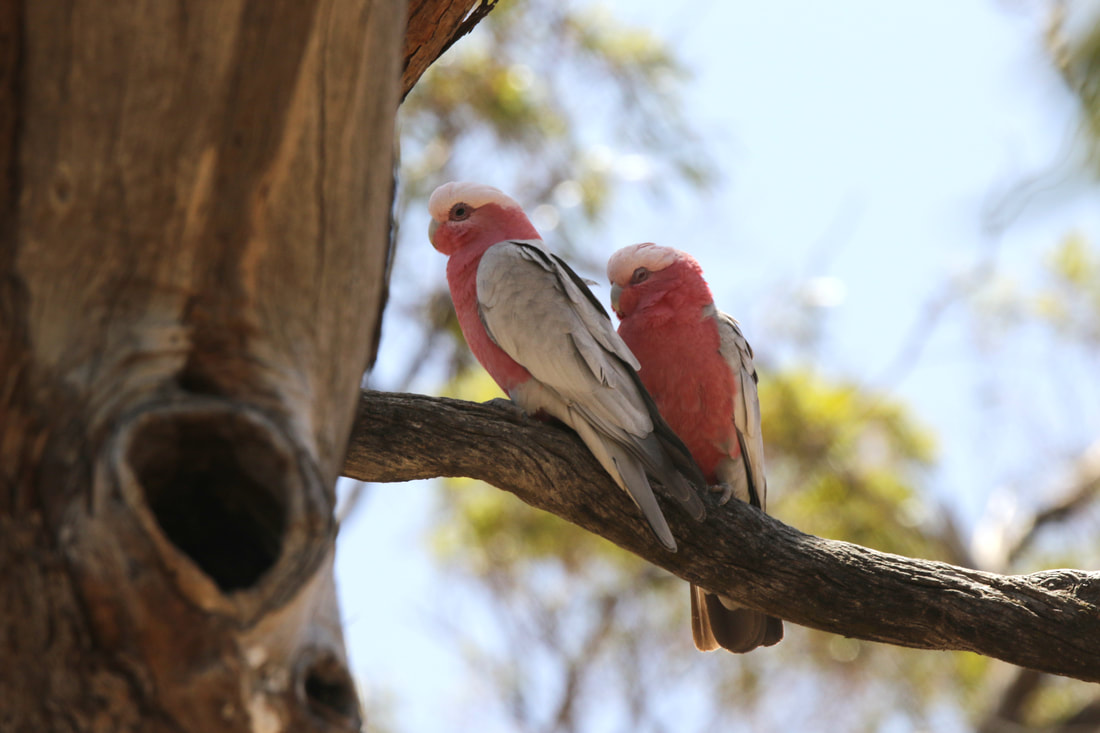
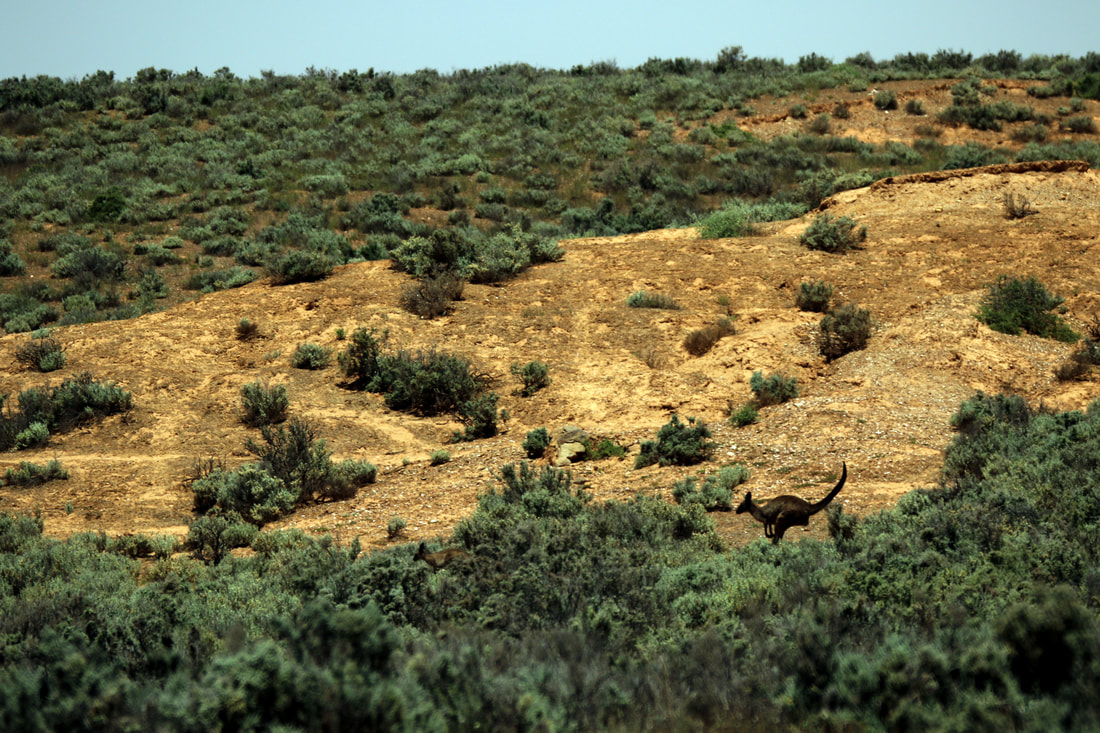
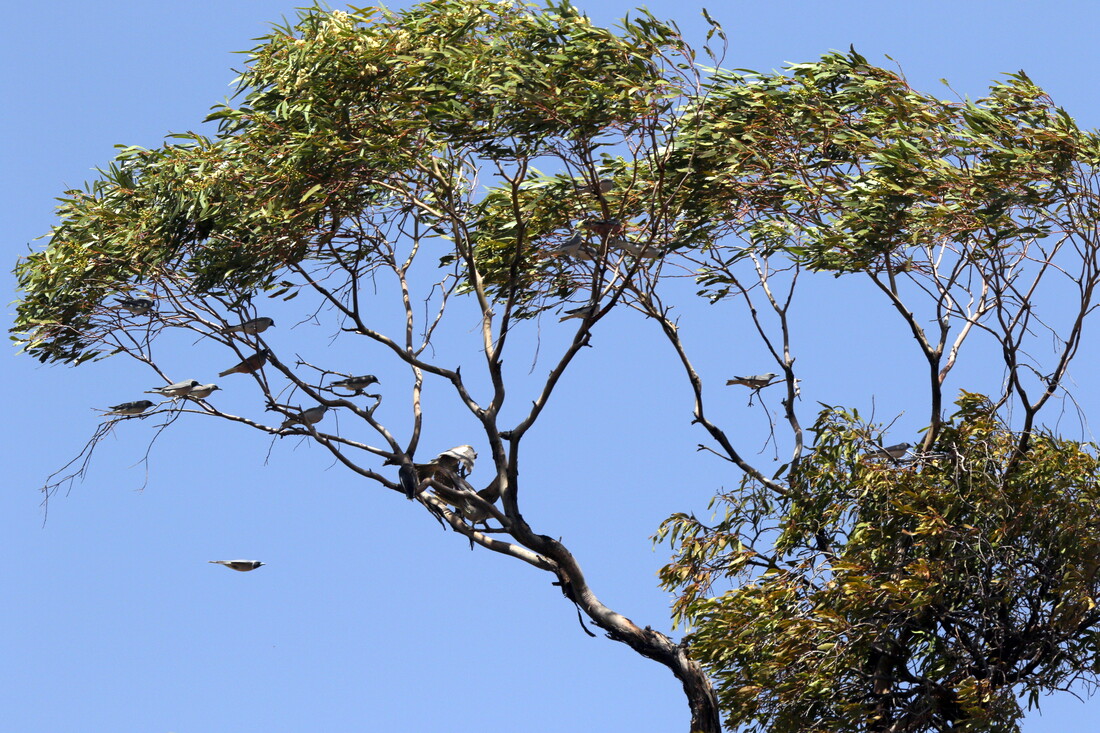
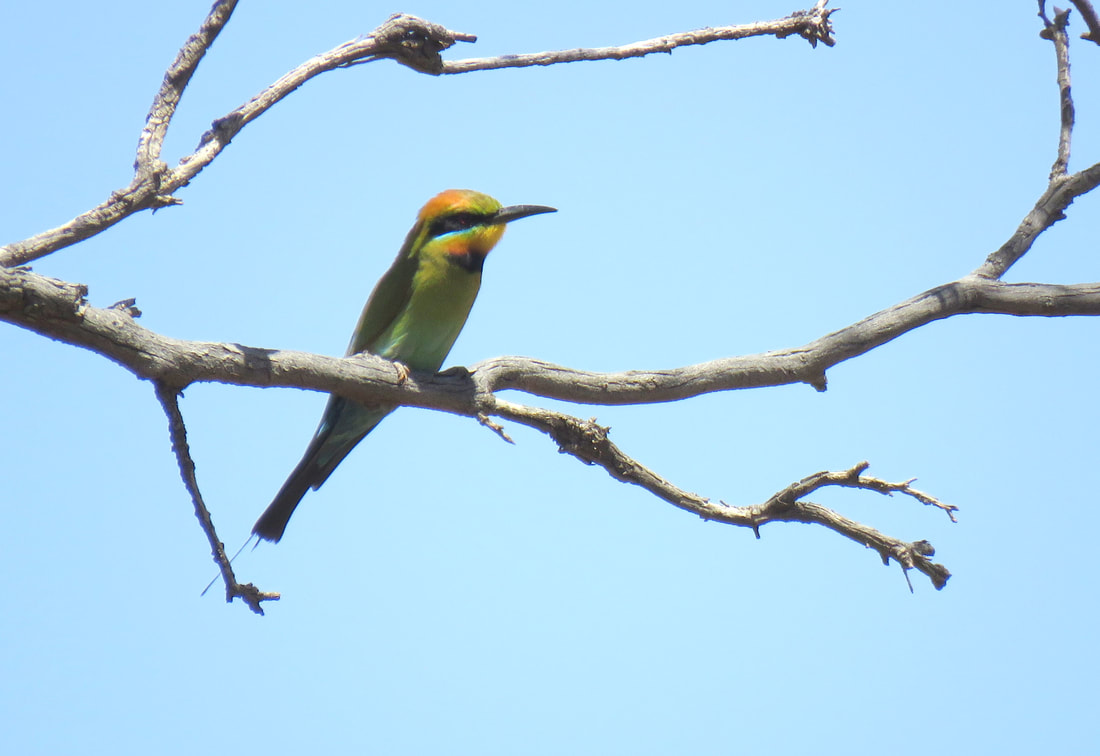
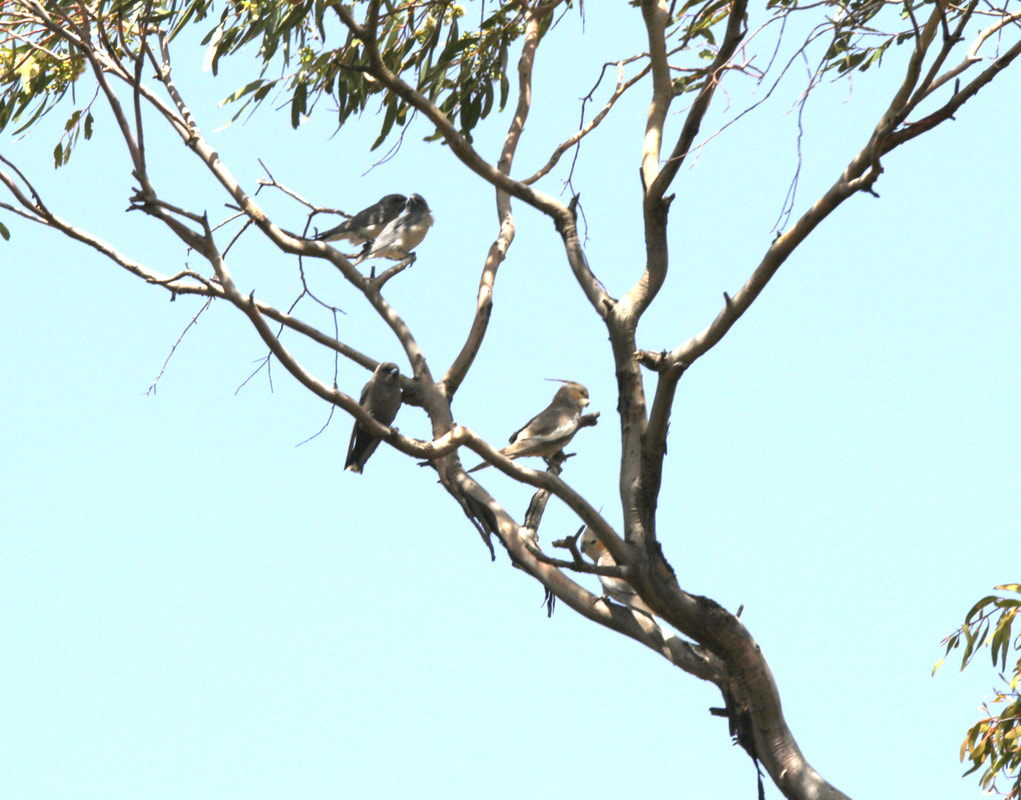
Since there have been several reports recently about sightings of Budgies, Bee-eaters and Cockatiels from Redbanks Conservation Park, which we have never visited, Paul and I decided to go there on Wednesday. The weather was sunny and windy, but although the wind made birding a little harder than normal, we were grateful that it reduced the number of flies. The drive up was beautiful, going through the slopes of the Adelaide Hills, into the gentler scenery of the Barossa Valley at Angaston and on to the mounded hills around Eudunda, with their memories of Colin Thiele’s The Sun on the Stubble, and on to the start of the Southern Flinders Ranges. A Wedge-tailed Eagle was spotted soaring overhead and shortly afterwards a Black Kite was seen attacking another eagle sitting on a post. Just south of Burra we turned on to Eastern Road, reaching the park after about 10 kilometres. There is a secluded camping area for 11 sites, where we saw only galahs, and about a kilometre away, an area for day visitors, which includes the splendid red banks that give the park its name. Here there is mallee and saltbush, with two creek beds. Many of the gums were flowering and as soon as we entered this area, we began to see birds: a Grey Shrike-thrush, whose song accompanied us the whole time we were there, three Black-faced Cuckoo-shrikes, and, on the tree we parked under, two budgies, indulging in a mutual preening session. Walking along the dry creek bed and surrounding slopes we soon glimpsed a Rainbow Bee-eater and, on a dead tree, a pair of Cockatiel. This pair were also spotted by a large and noisy crowd of mixed woodswallows, who pursued them in the fear, fully justified by their shape in flight, that they were kestrels. Once they perched, however, the woodswallows seemed perfectly willing to accept them, and joined them for a noisy but apparently amicable chat. Among the woodswallows we saw Dusky, Black-faced, Masked and the beautiful White-browed. Whistling Kites and Black Kites soared overhead, and a Brown Goshawk patrolled the ridge. Several other Budgerigars and Rainbow Bee-eaters appeared, and a Willie Wagtail made its presence known. There was a regrettable number of feral species—pigeons, starlings and sparrows—and the only Honey-eaters were White-plumed and White-naped. Flocks of Galahs went by, but, apart from the Cockatiels, no other parrot species. On the trip home, we were delighted to spot a Marsh Harrier patrolling a field of recently-mown hay. It was quite a long trip to make on a single day, but well worthwhile.
0 Comments
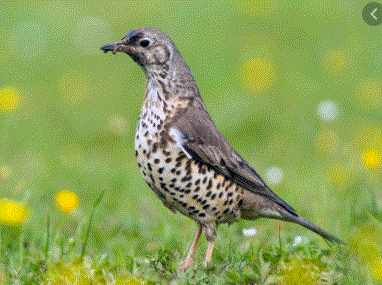
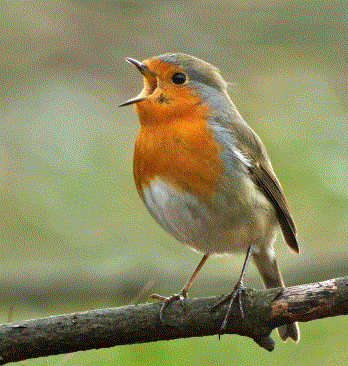
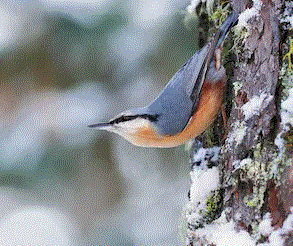
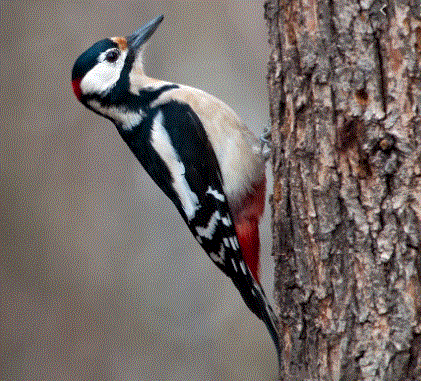
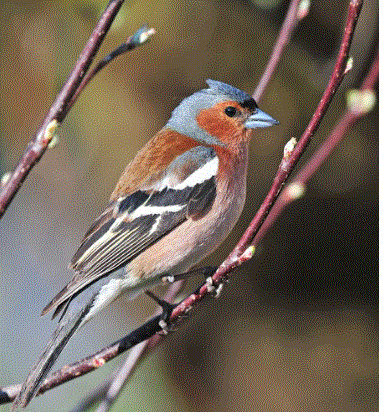
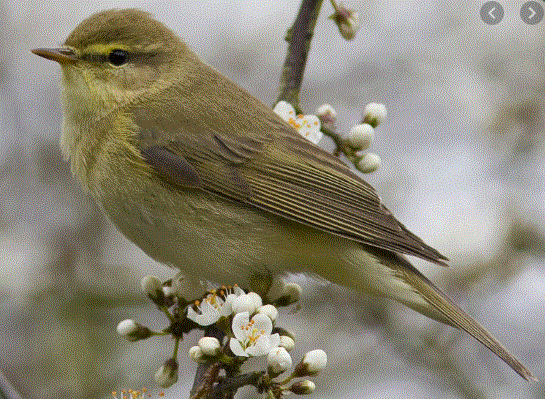
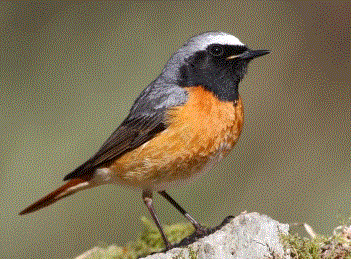
The Dawn Chorus by Chris Watson (in Icons of England, edited by Bill Bryson) A jumble of warbled notes tumbling down through the bare branches of a large beech tree was the starting point for me this year. It was mid-January. A mistle thrush, head thrown back, was singing powerfully into the face of a cold wind from the highest point in the canopy. I was grateful to that bird. Not only did the song lift my spirits on an otherwise cold and grey day, but it also reminded me of what was to come. This single bird song, these solo notes, would develop into a chorus of bird songs, gradually stirring across the whole of England. As the January daylight lengthened, other birds joined in. Robins began their evensong; a song thrush established a song post on a television aerial and broadcast its beautiful repertoire of repeated phrases. And from deep within the leafless twigs of our cotoneaster hedge, I heard the muted tones of blackbird subsong—a quiet and peculiar rehearsal for the full performance during the weeks to come. It’s in the woodlands, however, where the volume of song builds most. Agile nuthatches pipe their sweet notes from high branches and on early mornings the still atmosphere vibrates with one of early spring’s most exciting ‘songs’—great spotted woodpeckers drumming, rattling a tattoo on a favourite tree. These birds are our resident solo performers, advertising for a mate or establishing and defending a territory. During February we can isolate and localize these individuals as pinpoints of sound in the awakening woodland canopy. And then, one day in March, when the sound builds and the intensity increases, there is a change. I hear it twice or more before I actually stop and listen . . . Is it the end of a wren’s song? An aberrant chaffinch phrase? No. It is the sound of the first willow warbler. Unseen but clearly heard—a silvery descending song from somewhere above. Within moments, my ears also pick up another recent migrant’s tune—the jazz-like rhythm of the onomatopoeic chiffchaff. Over the next couple of weeks these warblers are joined by redstarts, pied flycatchers and secretive blackcaps. Eventually, the line-up is complete. In late April, I always keep a weather eye open for a high-pressure system over Northumberland, and then make my move. I arrive on the edge of ‘my’ woodland in the middle of the night (around 2.30 a.m.) and cable a stereo microphone sixty metres away, underneath a small stand of oak trees. Perched on my camping stool, with headphones on, I listen and wait. At 3.12 a.m., a redstart sings and is quickly followed by a robin—with a territorial reply across the clearing—then song thrush, wren and blackbird. The notes, phrases and songs mix and melt into a rich wall of sound, and this dawn chorus seems to light the spark for sunrise. At our latitudes I believe we have the very best dawn chorus in the world. Characterized by its slow development—a kind of evolution each new year—all the solo performances coalesce into a new sound and release an outpouring of song from our woodlands. It’s our own private chorus that transforms the darkness into light. |
Archives
February 2021
Categories |
- Home
- Meetings
-
Outings
- Aldinga Scrub
- Altona
- Belair NP
- Brown Hill Creek
- Brown's Rd., Monarto
- Charleston Conservation Park
- Cox Scrub
- Currency Creek
- Goolwa Barrage
- Goolwa Barrage
- Goolwa Sewage Ponds
- Hindmarsh River Walk
- Kaiserstuhl Conservation Park
- Kyeema Conservation Park
- Laratinga
- Magazine Rd Wetlands
- Mannum Waterfalls
- Milang and Clayton Bay
- Monarto CP
- Myponga
- Onkaparinga River Recreation Park
- Kinchina
- Scott Conservation Park
- Sunnyside Lookout & Paiwalla
- Tokuremoar Reserve, Goolwa
- Tolderol
- Washpool
- Watachalunga
- Whites Road Wetlands
-
Australian Bird Library
- Recent Splits
- Photographer Credits
- Albatross
- Apostlebird
- Avocet
- Babbler
- Baza
- Bee-Eater
- Bellbird (crested)
- Bittern
- Blackbird
- Black-Cockatoo
- Blue Bonnet
- Boobook
- Booby
- Bowerbird
- Bristlebird
- Brolga
- Bronze-cuckoo
- Bronzewing
- Brush-turkey
- Budgerigar
- Bulbul and Bushlark
- Bustard
- Butcherbird
- Button-quail
- Buzzard
- Cassowary
- Catbird
- Chat
- Chough
- Chowchilla
- Cicadabird
- Cisticola
- Cockatiel
- Cockatoo: Gang-gang
- Cockatoo: Major Mitchell
- Cockatoo: Palm
- Cockatoo: Sulphur-crested
- Coot
- Corella
- Cormorant
- Coucal, Pheasant
- Crake
- Crane, Sarus
- Crow, Little
- Cuckoos
- Cuckoo-Dove, Brown
- Cuckoo Shrike, Barred to Cuckoo Shrike, White-bellied
- Curlew
- Currawong
- Darter
- Dollarbird
- Dotterel
- Dove
- Drongo, Spangled
- Duck, Australian Wood
- Duck, Blue-billed
- Duck: Freckled
- Duck: Musk
- Duck: Pacific Black
- Duck: Pink-eared
- Eagle
- Egret
- Emu
- Emu-wren
- Fairy-wren
- Falcon
- Fantail
- Fieldwren
- Figbird
- Fig-parrot, Double-eyed
- Finch, Black-throated to Gouldian
- Finch, Long-tailed to Finch, Zebra
- Firetail
- Flycatcher
- Friarbird
- Frigatebird
- Frogmouth
- Fruit-dove
- Galah
- Gannet
- Gerygone
- Giant-Petrel
- Gibberbird
- Goldfinch
- Goose, Cape Barren
- Goose-Magpie
- Goshawk
- Grassbird
- Grasswren
- Grebe
- Greenfinch, Common
- Greenshank
- Gull
- Hardhead
- Harrier
- Heathwren
- Heron
- Hobby
- Honeyeater, Banded to Honeyeater, Crescent
- Honeyeater, Dusky, to Honeyeater, New Holland
- Honeyeater, White-naped to Honeyeater, Yellow-tufted
- Ibis
- Imperial-Pigeon
- Jacana
- Jacky Winter
- Jaeger
- Junglefowl
- Kestrel
- Kingfisher
- King-parrot
- Kite
- Knot
- Koel, Eastern
- Kookaburra
- Lapwing
- Logrunner
- Lorikeet
- Lyrebird
- Magpie
- Malleefowl
- Mallard
- Mannikin
- Manucode
- Martin
- Miner
- Mistletoebird
- Monarch
- Moorhen
- Myna
- Native-hen
- Night-heron, Nankeen
- Nightjar
- Noddy
- Oriole
- Osprey
- Ostrich
- Owl
- Owlet-nightjar
- Oystercatcher
- Pardalote
- Parrot, Blue-winged
- Parrot, Bourke's
- Parrot: Eclectus to Princess
- Parrot: Red-capped to Parrot, Regent
- Parrot: Rock to Turquoise
- Peafowl
- Pelican
- Penguin
- Petrel
- Phalarope
- Pheasant ring-necked (feral)
- Pigeon
- Pipit
- Pitta
- Plains Wanderer
- Plover: Double-banded to Hooded
- Plover: Oriental to Sand
- Pratincole
- Prion
- Pygmy-goose
- Quail
- Rail
- Quail-thrush
- Raven
- Redshank
- Redthroat
- Reedwarbler
- Riflebird
- Ringneck
- Robin
- Rock-pigeon
- Rock Warbler
- Rosella
- Ruff
- Sanderling
- Sandpiper
- Scrubfowl
- Scrub-robin
- Scrubwren
- Sea-Eagle
- Shearwater
- Shelduck
- Shoveler
- Shrike
- Shrike-thrush
- Shrike-tit
- Silvereye
- Sittella
- Skua
- Snipe
- Songlark
- Sparrow
- Sparrowhawk
- Spinebill
- Spoonbill
- Starling
- Stilt
- Stint
- Stone-curlew
- Stork (Jabiru)
- Storm-petrel
- Sunbird
- Swallow
- Swamphen
- Swan
- Swift and Swiftlet
- Tattler
- Teal
- Tern: Black-naped to Gull-billed
- Tern Little to White-winged
- Thornbill
- Thrush
- Treecreeper
- Triller
- Tropicbird
- Turnstone
- Willie Wagtail
- Warbler
- Waterhen
- Wattlebird
- Wedgebill
- Weebill
- Whimbrel
- Whipbird
- Whistler
- Whistling-Duck
- White-eye
- Whiteface
- Woodswallow
- Woodhen
-
Birds of the World
- Photographer Credits
- Struthionidae (Ostriches)
- Rheidae (Rheas)
- Tinamidae (Tinamous)
- Casuariidae (Cassowaries and Emus)
- Apterygidae (Kiwis)
- Megapodiidae
- Cracidae (Guans Chachalacas Curassows)
- Numididae (Guineafowls)
- Odontophoridae (New World Quails)
- Phasianidae (Pheasants)
- Anhimidae Screamers
- Anseranatidae Magpie Goose
- Anatidae Waterfowl
- Podicipedidae (Grebes)
- Phoenicopteridae (Flamingos)
- Columbidae (Doves)
- Pteroclidae (Sandgrouse)
- Steatornithidae (Oilbirds)
- Nyctibiidae (Potoos)
- Podargidae (Frogmouths)
- Caprimulgidae (Nightjars and Nighthawks)
- Aegothelidae (Owlet-nightjars)
- Hemiprocnidae (Treeswifts)
- Apodidae Swifts
- Trochilidae (Hummingbirds)
- Cuculidae (Cuckoos)
- Musophagidae (Turacos)
- Otididae (Bustards)
- Opisthocomidae Hoatzin
- Heliornithidae (Sungrebes and Finfoots)
- Sarothruridae Flufftails and African Woodrails
- Rallidae Rails and Coots
- Psophiidae Trumpeters
- Aramidae (Limpkin)
- Gruidae Cranes
- Burhinidae (Thickknees and Stone Curlews)
- Chionidae (Sheathbills)
- Pluvianellidae (Magellanic Plover)
- Pluvianidae Egyptian Plover
- Haematopodidae (Oystercatchers)
- Ibidorhynchidae (Ibisbill)
- Recurvirostridae Stilts and Avocets
- Charadriidae Plovers
- Pedionomidae Plains-wanderer
- Thinocoridae Seedsnipes
- Rostratulidae Painted-snipe
- Jacanidae Jacanas
- Scolopacidae Sandpipers
- Turnicidae Buttonquails
- Dromadidae Crab-plover
- Glareolidae Coursers and Pratincoles
- Laridae Gulls, Terns and Skimmers
- Stercorariidae Skuas and Jaegers
- Alcidae Auks
- Rhynochetidae Kagu
- Eurypygidae Sunbittern
- Phaethontiformes Tropicbirds
- Gaviidae Loons
- Spheniscidae Penguins
- Oceanitidae Southern Storm-petrels
- Diomedeidae Albatrosses
- Hydrobatidae Northern Storm-petrels
- Procellariidae Petrels
- Ciconiidae Storks
- Fregatidae Frigatebirds
- Sulidae Boobies and Gannets
- Phalacrocoracidae Cormorants
- Anhingidae Anhingas
- Threskiornithidae Ibises and Spoonbills
- Ardeidae Herons
- Scopidae Hamerkop
- Balaenicipitidae Shoebill
- Pelecanidae Pelicans
- Cathartidae New World Vultures
- Sagittariidae Secretarybird
- Pandionidae Osprey
- Accipitridae Hawks (1)
- Accipitridae Hawks (2)
- Accipitridae Hawks (3)
- Accipitridae Hawks (4)
- Accipitridae Hawks (5)
- Strigidae Owls (1)
- Strigidae Owls (2 Otus)
- Strigidae Owls (3)
- Tytonidae (Barn Owls)
- Coliidae Mousebirds
- Leptosomidae Cuckoo-roller
- Trogonidae Trogons
- Bucerotidae Hornbills
- Upupidae Hoopoes
- Phoeniculidae Woodhoopoes
- Meropidae Bee-eaters
- Coraciidae Rollers
- Brachypteraciidae Ground-rollers
- Todidae Todies
- Momotidae Motmots
- Alcedinidae Kingfishers
- Galbulidae Jacamars
- Capitonidae New World Barbets
- Bucconidae Puffbirds
- Ramphastidae Toucans
- Semnornithidae Prong-billed Barbets
- Lybiidae African Barbets
- Megalaimidae Asian Barbets
- Indicatoridae Honeyguides
- Picidae Woodpeckers
- Cariamidae Seriemas
- Falconidae Falcons and Caracaras
- Strigopidae New Zealand Parrots
- Cacatuidae Cockatoos
- Psittacidae Parrots 1
- Psittacidae Parrots 2
- Acanthisittidae New Zealand Wrens
- Pittidae Pittas
- Philepittidae Asities
- Eurylamidae Patterned Broadbills
- Sapayoidae Sapayoa
- Calyptomenidae Green and African Broadbills
- Thamnophilidae Antbirds
- Conopophagidae Gnateaters
- Melanopareiidae Crescentchests
- Grallariidae Antpittas
- Rhinocryptidae Tapaculos
- Formicariidae Ant-thrushes
- Furnariidae Ovenbirds 1
- Furnariidae Ovenbirds (2 Cinclodes)
- Furnariidae Ovenbirds (3)
- Pipridae Manakins
- Cotingidae Cotingas
- Tityridae Tityras
- Tyrannidae Tyrant Flycatchers 1
- Tyrannidae Tyrant Flycatchers 2 2
- Tyrannidae Tyrant Flycatchers 3
- Menuridae Lyrebirds
- Achornithidae scrub-birds
- Ptilonorhynchidae Bowerbirds
- Climacteridae Australasian Treecreepers
- Maluridae Fairywrens
- Dasyornithidae Bristlebirds
- Meliphagidae Honeyeaters
- Pardalotidae Pardalotes
- Acanthizidae Thornbills
- Orthonycidae Logrunners and Chowchilla
- Pomatostomidae Australasian Babblers
- Mohouidae New Zealand Creepers
- Eulacestomidae (Wattled Ploughbird)
- Neosittidae Sitellas
- Oriolidae Old World Orioles
- Paramythidae Painted Berrypickers
- Oreoicidae Australo-Papuan Bellbirds
- Cinclosomatidae Quail-thrushes
- Falcunculidae Shrike-tit
- Pachycephalidae Whistlers
- Psophodidae Whipbirds
- Vireonidae Vireos
- Campephagidae Cuckoo-shrikes
- Rhagologidae Mottled Whistler
- Artamidae Woodswallows, Magpies and Butcherbirds
- Machaerirhynchidae Boatbills
- Vangidae Vangas and allies
- Platysteiridae Batises and Wattle-eyes
- Aegithinidae Ioras
- Pityriasidae Bristlehead
- Malaconotidae Bush-shrikes
- Rhipiduridae Fantails
- Dicruridae Drongos
- Ifritidae Ifrita
- Monarchidae Monarch Flycatchers
- Platylophidae Shrike-jay
- Laniidae Shrikes
- Corvidae Crows and Jays
- Melampittidae
- Corcoracidae Australian Mudnesters
- Paradisaedae Birds-of-Paradise
- Callaeidae New Zealand Wattlebirds
- Notiomystidae Stitchbird
- Melanocharitidae Berrypeckers and Longbills
- Cnemophilidae Satinbirds
- Picathartidae Rockfowls
- Eupetidae Rail-babbler
- Chaetopidae Rockjumpers
- Petroicidae Australasian Robins
- Hyliotidae Hyliotas
- Stenostiridae Fairy Flycatchers
- Paridae Tits and Chickadees
- Remizidae Penduline-tits
- Alaudidae Larks
- Panuridae Bearded Reedling
- Nicatoridae Nicators
- Macrosphenidae Crombecs and Allies
- Cisticolidae Cisticolas and Allies
- Acrocephalidae Reed Warblers and Allies
- Pnoepygidae Cupwings
- Locustellidae Grassbird and Allies
- Donacobiidae Donacobius
- Bernieridae Malagasy Warblers
- Hirundinidae Swallows and Martins
- Pycnonotidae Bulbuls
- Phylloscopidae Leaf Warblers
- Scotocercidae Bush Warblers
- Aegithalidae Long-tailed Tits
- Sylviidae Sylviid Warblers and Parrotbills
- Zosteropidae White-eyes and Yuhinas
- Timaliidae Tree Babblers
- Pellorneidae Ground Babblers and Allies
- Leiothrichidae Laughing-thrushes and Allies
- Certhiidae Treecreepers
- Sittidae Nuthatches
- Polioptilidae Gnatcatcher and Gnatwrens
- Troglodytidae Wrens
- Cinclidae Dippers
- Buphagidae Oxpeckers
- Sturnidae Starlings and Mynas
- Mimidae Mockingbirds and Thrashers
- Turdidae Thrushes
- Muscicapidae Old World Flycatchers and Chats 1
- Muscicapidae Old World Flycatchers and Chats 2
- Muscicapidae Old World Flycatchers and Chats 3
- Muscicapidae Old World Flycatchers and Chats 4
- Muscicapidae Old World Flycatchers and Chats 5
- Bombycillidae waxwings
- Promeropidae Sugarbirds
- Irenidae Fairy-bluebirds
- Chloropseidae Leafbirds
- Dicaeidae Flowerpeckers
- Nectariniidae Sunbirds and Spiderhunters
- Prunellidae Accentors
- Ploceidae Weavers and Allies
- Estrildidae Waxbills and Allies
- Viduidae Whydahs and Indigobirds
- Passeridae Old World Sparrows
- Motacillidae Pipits and Wagtails
- Fringillidae Finches and Allies
- Calcariidae Longspurs
- Rhodinocichla Thrush-tanager
- Emberizidae Old World Buntings
- Passerellidae New World Sparrows
- Icteridae New World Blackbirds
- Parulidae New World Warblers
- Cardinalidae Cardinals and Allies
- Thraupidae Tanagers and Allies
- Thraupidae Tanagers and Allies 2
- Thraupidae Tanagers and Allies 3
- Thraupidae Tanagers and Allies 4
 RSS Feed
